Reading list
Books
Books Rory has written, recommended, and mentioned across his talks and interviews.
-
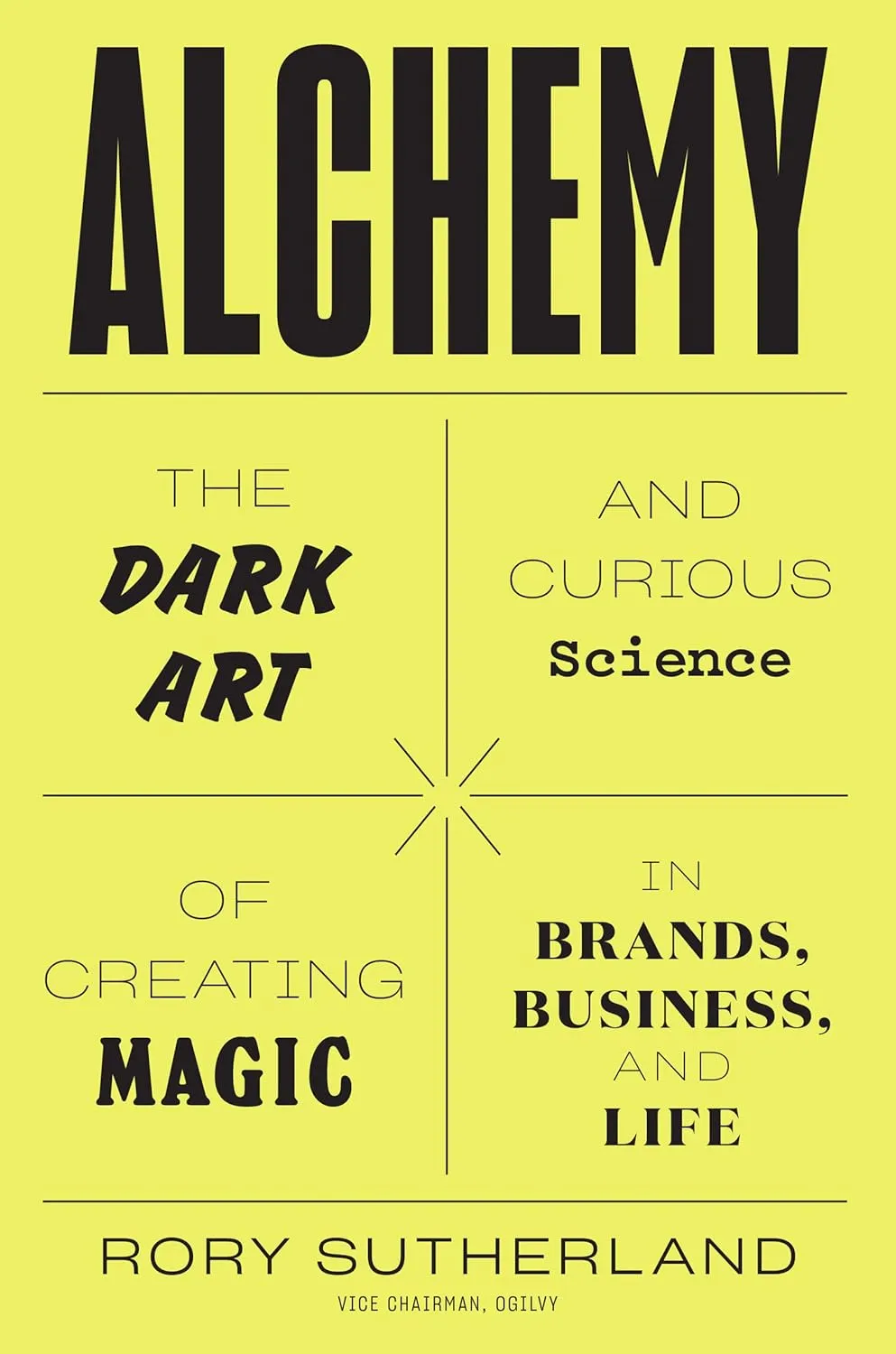
Alchemy
by RoryRory Sutherland · 2019
Rory Sutherland's own book — a brilliant argument that the irrational, the illogical, and the seemingly absurd are far more powerful forces in human behaviour than rational logic. Drawing on behavioural science and decades at Ogilvy, he shows why the most valuable solutions are often those that make no sense on paper.
Mentioned in
- → Why Business Is A Casino
- → Brand New: The Best Rory Sutherland Interview You'll Ever Watch (4K)
- → How Your Brain Gets Tricked By Clever Marketing
- → Why Cost Reduction Isn't A Strategy
- → The Marketing Secrets Apple & Tesla Always Use: Rory Sutherland | E165
- → Why Marketing Is the Weather, Not the Spreadsheet
- → Marketing Expert: The Playbook Behind Every Great Campaign
- → Nudgestock 2023 - It's time to embrace the mess
- → RORY SUTHERLAND’S 10 RULES OF ALCHEMY
- → What most people miss about marketing
- → Dirty Little Marketing Secrets That Always Work
- → Rory Sutherland | Key Customer Insights for 2026 | London
- → The Psychology Of Irrationality
-
Nudge
Richard Thaler & Cass Sunstein · 2008
The book that introduced nudge theory to the mainstream — how small, well-designed changes to choice architecture can dramatically shift behaviour without restricting freedom. Required reading for understanding why Rory believes context and framing matter more than incentives.
Mentioned in
- → This tiny change made $10 Million
- → The Lost Genius of Irrationality: Rory Sutherland at TEDxOxford
- → Brand New: The Best Rory Sutherland Interview You'll Ever Watch (4K)
- → Are We Now Too Impatient to Be Intelligent?
- → Marketing Expert: The Playbook Behind Every Great Campaign
- → What most people miss about marketing
- → Dirty Little Marketing Secrets That Always Work
- → The Psychology Of Irrationality
- → The Psychology of Selling
-
Antifragile
Nassim Nicholas Taleb · 2012
Taleb's follow-up to The Black Swan — a framework for things that gain from disorder. Where fragile systems break under stress and robust ones resist it, antifragile systems actually improve. Rory's embrace of variance, exploration, and messiness is deeply aligned with Taleb's argument that over-optimisation is its own form of fragility.
Mentioned in
- → Brand New: The Best Rory Sutherland Interview You'll Ever Watch (4K)
- → Why Marketing Is the Weather, Not the Spreadsheet
- → Marketing Expert: The Playbook Behind Every Great Campaign
- → Alchemy: The Surprising Power of Ideas That Don't Make Sense
- → Rory Sutherland | Key Customer Insights for 2026 | London
-
The Black Swan
Nassim Nicholas Taleb · 2007
Taleb's landmark book on the disproportionate role of rare, unpredictable, high-impact events — and why we are blind to them. Rory cites Taleb repeatedly to argue that business and policy are fat-tailed: a tiny number of decisions account for most of the value, which is why optimising the average is a catastrophic mistake.
Mentioned in
- → Brand New: The Best Rory Sutherland Interview You'll Ever Watch (4K)
- → Why Marketing Is the Weather, Not the Spreadsheet
- → Marketing Expert: The Playbook Behind Every Great Campaign
- → Alchemy: The Surprising Power of Ideas That Don't Make Sense
- → Rory Sutherland | Key Customer Insights for 2026 | London
-
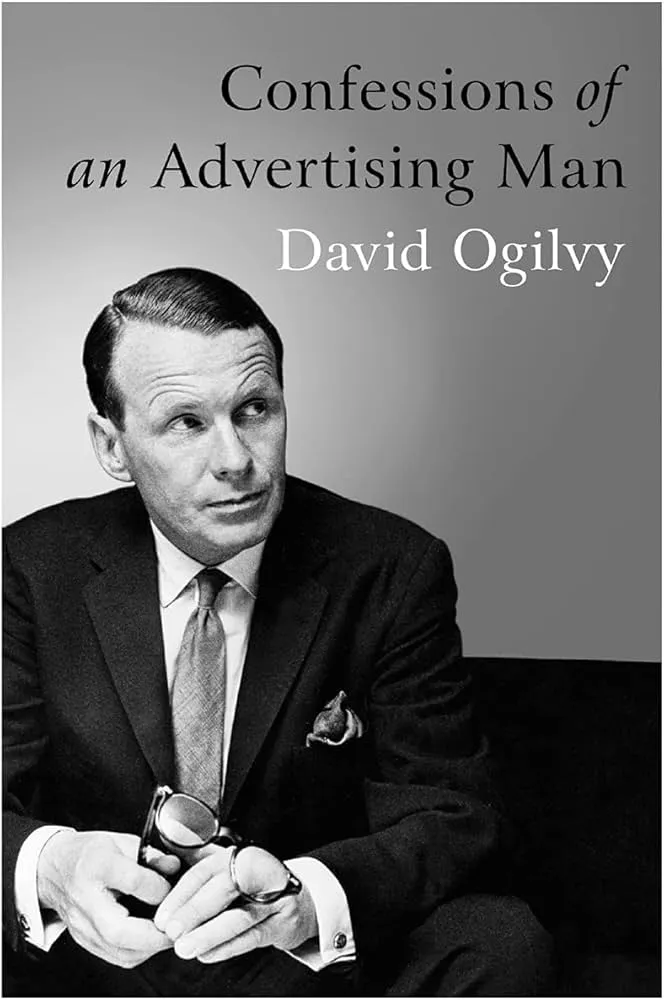
Confessions of an Advertising Man
David Ogilvy · 1963
The classic by Rory's professional forebear at Ogilvy — a candid, opinionated manual on what actually works in advertising, written with characteristic wit and backed by decades of real-world results. Rory returns to Ogilvy repeatedly as an example of a practitioner who understood human psychology long before it was formalised.
-
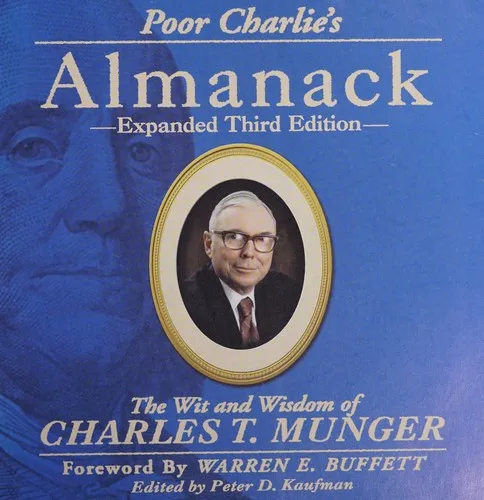
Poor Charlie's Almanack
Charlie Munger · 2005
The collected wisdom of Warren Buffett's partner — a compendium of mental models, multidisciplinary thinking, and hard-won business philosophy. Rory repeatedly references Munger as an example of a business thinker who escapes the tunnel vision of single-discipline reasoning and embraces psychological reality.
-
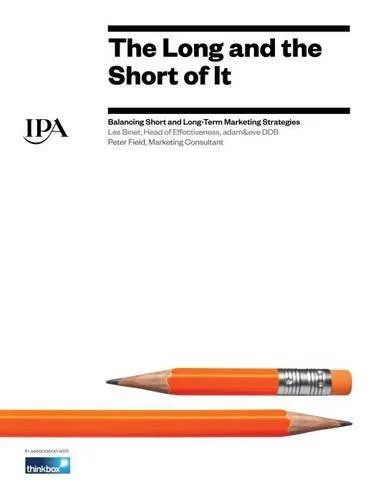
The Long and the Short of It
Les Binet & Peter Field · 2013
The most influential piece of evidence-based research in advertising — a rigorous IPA databank analysis showing that long-term brand-building and short-term activation work through different mechanisms and need to be balanced, not traded off. Rory uses it to rebut the finance department's obsession with short-term measurable returns.
-
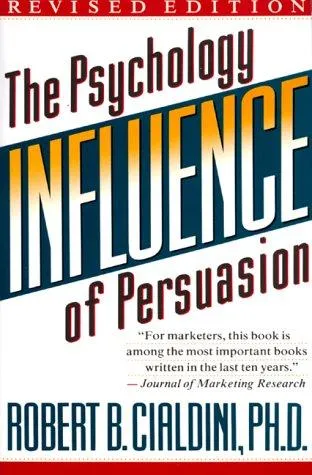
Influence
Robert Cialdini · 1984
The definitive work on the psychology of persuasion — six principles (reciprocity, commitment, social proof, authority, liking, scarcity) that explain why people say yes. Rory references Cialdini to show that these aren't tricks but deep evolutionary heuristics that rational models ignore.
-
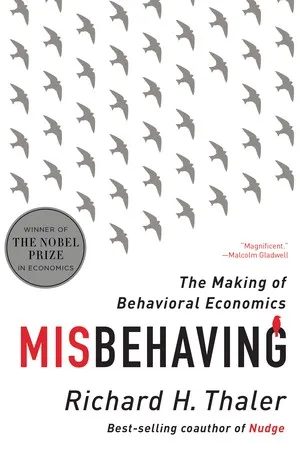
Misbehaving
Richard Thaler · 2015
Thaler's memoir of how behavioural economics was built — the story of a Nobel Prize winner who spent decades proving that real humans are nothing like the rational agents of economic theory. Rory celebrates Thaler's Nobel win in several talks as vindication of the entire field.
-
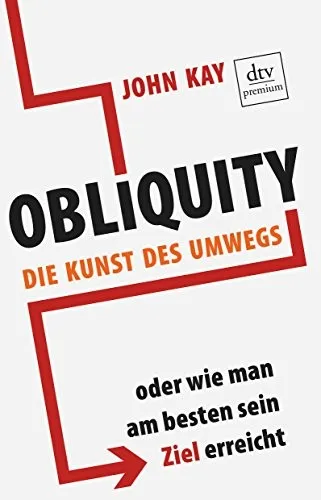
Obliquity
John Kay · 2010
Kay's argument that complex goals are best achieved indirectly. The happiest people don't pursue happiness directly; the most profitable companies don't pursue profit above all else. Rory recommends it as a rigorous economic case for why straightforward, logical problem-solving so often fails.
-
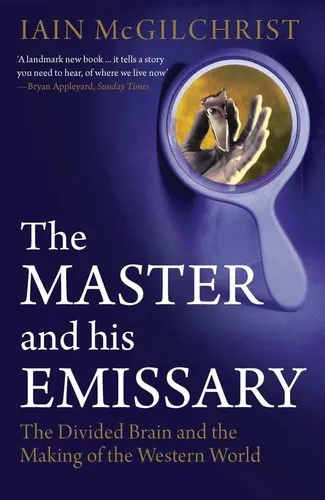
The Master and His Emissary
Iain McGilchrist · 2009
McGilchrist's monumental argument that the left and right hemispheres of the brain attend to the world in fundamentally different ways — and that Western culture has dangerously over-privileged the left hemisphere's narrow, instrumental mode of thinking. Rory draws on it to explain why logical, data-driven organisations systematically destroy value.
-
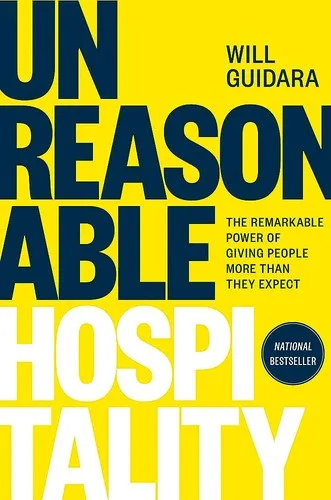
Unreasonable Hospitality
Will Guidara · 2022
The story of how Will Guidara turned Eleven Madison Park into the world's best restaurant — not through better food, but through unreasonable acts of human generosity that made guests feel extraordinarily seen. Rory cites it as a masterclass in the principle that small, unexpected gestures of delight produce disproportionate loyalty.
-
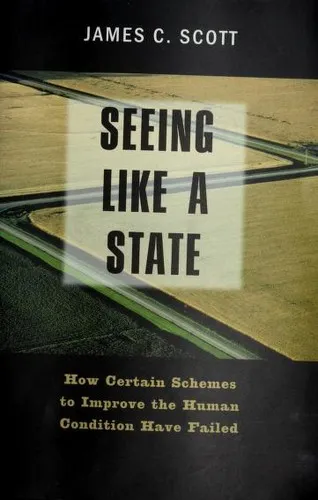
Seeing Like a State
James C. Scott · 1998
Scott's analysis of how states and large institutions simplify complex, illegible realities to make them legible and manageable — and how this process systematically destroys the local knowledge and organic complexity that makes things actually work. A direct intellectual ancestor of Rory's argument against top-down rationalism in business.
Mentioned in
-
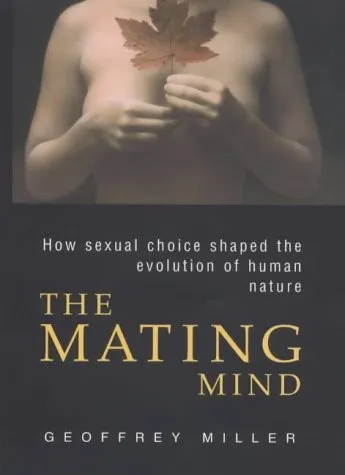
The Mating Mind
Geoffrey Miller · 2000
Miller's evolutionary psychology argument that the human mind evolved primarily as a display organ — to attract mates through creativity, intelligence, and humour. Rory draws on it to explain why so much of consumer behaviour is really about signalling to others rather than optimising for personal utility.
-
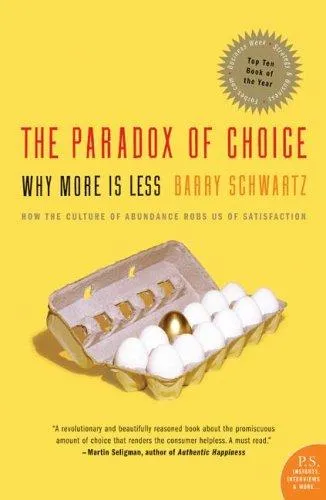
The Paradox of Choice
Barry Schwartz · 2004
Why more choice doesn't make us happier — and often makes us worse off. Schwartz shows that abundance of options increases anxiety, regret, and dissatisfaction. Rory references this to explain why constraining choice (as TikTok and Tesla do) is often a feature, not a bug.
Mentioned in
-
The Wealth of Nations
Adam Smith · 1776
The founding text of modern economics — and a book Rory has a complex relationship with. He points out that Smith's original insights were far more nuanced and psychologically realistic than the stripped-down rational-agent model that later economists built in his name. The real Adam Smith understood human nature; his disciples forgot it.
Mentioned in
-
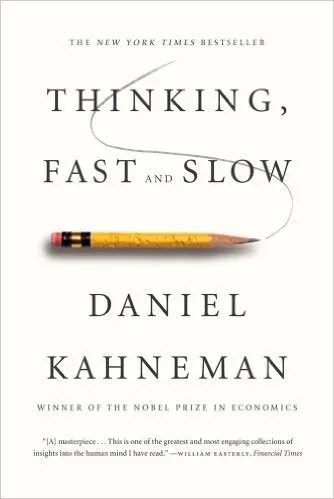
Thinking, Fast and Slow
Daniel Kahneman · 2011
Kahneman's masterwork on the two systems of thought — the fast, intuitive, emotional System 1 and the slow, deliberate, logical System 2. Essential background for understanding Rory's argument that most valuable human behaviour runs on System 1, yet organisations insist on designing for System 2.
Mentioned in